
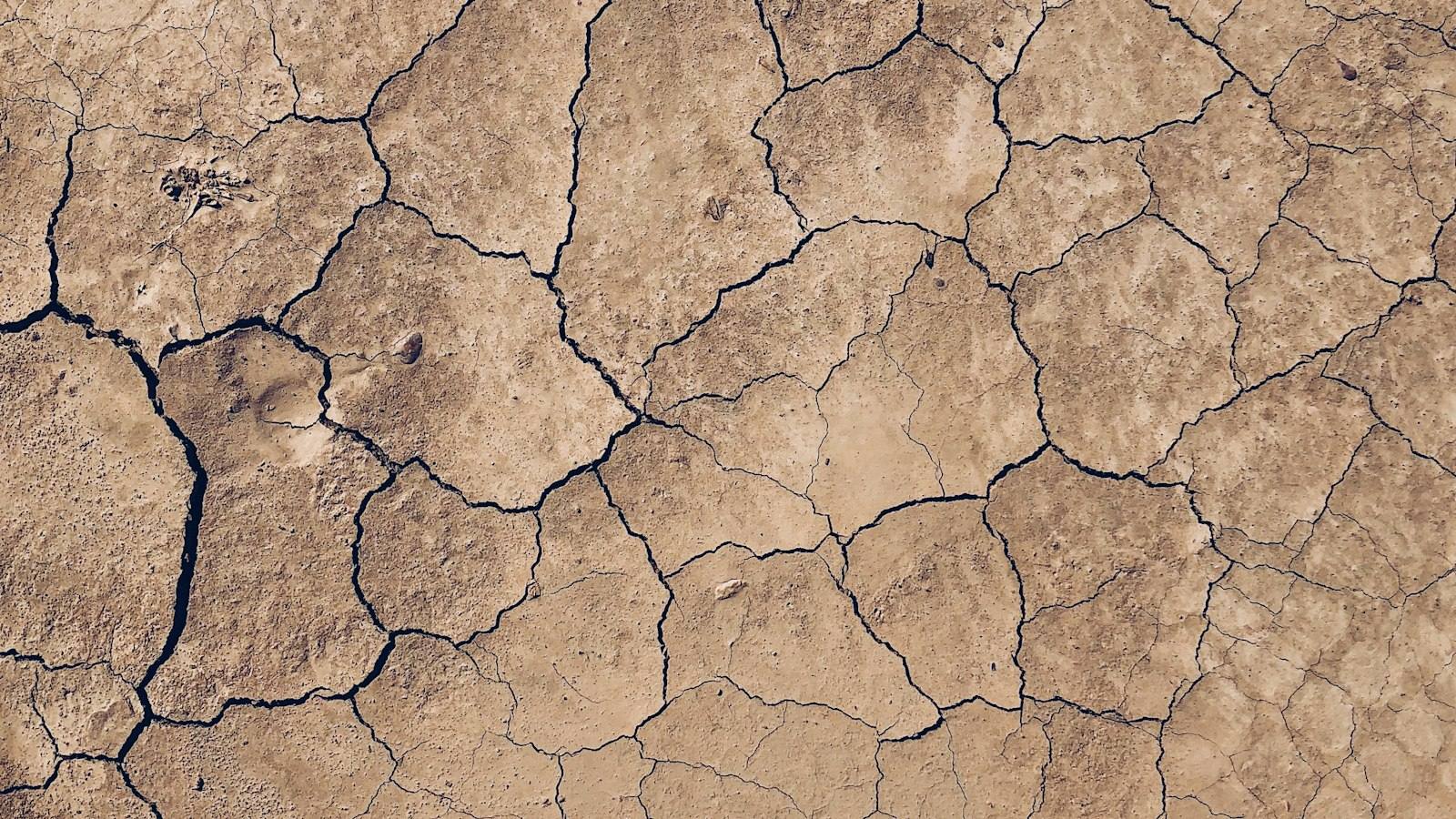
Most Toowoomba building blocks sit on clay that formed from weathered basalt. That clay swells when it gets wet and shrinks as it dries. How much it moves, how deep it goes, and what's been done to the ground before you arrived decides your footing design and a big part of your build cost.
Soiltech has tested soil from its Toowoomba base since 1986 and has completed close to 50,000 residential site classifications across Queensland and Northern NSW. This guide explains the soil conditions we see most often around Toowoomba, what each one means for your build, and when to get your soil tested.
Short answer: Toowoomba is mainly built on basalt from the Main Range Volcanics. Over time that basalt has weathered into red, black and in between clay soils, and all of them can move as their moisture changes.
Geological mapping by the University of Southern Queensland describes the Toowoomba urban area as mainly floored by basalts and related rocks of the Main Range Volcanics (Willey, 2003, Quaternary International). Soil research going back to the 1950s describes how red, black and transitional soil types all develop from that same basalt around Toowoomba (Ferguson, 1954, CSIRO Australian Journal of Agricultural Research).
These are the deep red soils Toowoomba is known for, common across much of the plateau. They're generally better drained than black soils. They're still clay, though, and their reactivity has to be measured, not assumed.
These clays open wide cracks in dry weather and swell again after rain. They're common on the Darling Downs side of the city and in lower lying parts of the region. Local builder Stroud Homes notes that deep black and dark brown clays on the Darling Downs, and in parts of Toowoomba, can reach the extremely reactive end of the AS2870 scale.
Between the red and black soils you'll find brown, mixed profiles. On some blocks the basalt rock sits close to the surface, with weathered boulders ("floaters") through the clay. Shallow rock changes how footings are designed and how hard the site is to excavate.
Short answer: Basalt derived clay absorbs water and swells, then shrinks as it dries. Toowoomba's swings between wet seasons and dry spells repeat that cycle, which can crack slabs and walls if footings aren't designed for it.
Engineers call this soil reactivity. A reactive clay doesn't move evenly across a site. The edges of a slab dry out and wet up faster than the middle, so the ground under one corner can rise or fall while the rest stays put. That uneven movement is what cracks brickwork and makes doors stick.
A few site features make it worse:
A soil test measures how reactive your clay is. The site inspection that comes with it records these other influences so your engineer can allow for them.
Short answer: The six conditions that most often change footing design around Toowoomba are reactive red clay, black cracking clay, shallow basalt rock, fill in new estates, steep range slopes, and ground disturbed by trees or old buildings.
Short answer: No single class applies across Toowoomba. Blocks can range from slightly reactive to extremely reactive, or Class P. Only a soil test on your building site can tell you which.
Under AS2870, every residential site is given a classification:
You can read more about how AS2870 site classifications work in our full guide.
In Toowoomba, two neighbouring blocks can land in different classes. The basalt clay can change in depth over a short distance. One block might have had a tree removed or fill placed during subdivision. Another might sit closer to rock. That's why you can't rely on a neighbour's report, and why your engineer and certifier will need a classification for your own building site.
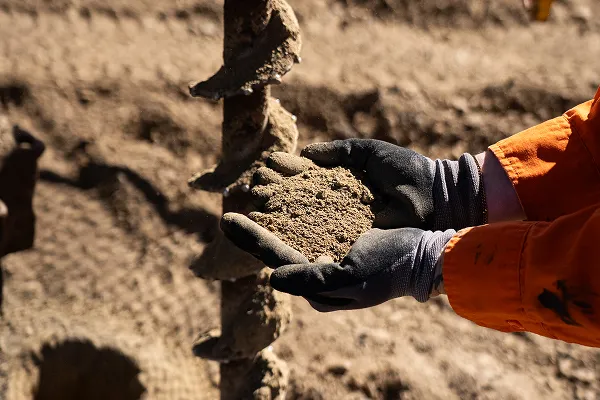
Short answer: For a standard house or extension, Soiltech drills two test holes to at least 2.5 metres. We log the soil, take samples for our Toowoomba NATA accredited laboratory, and issue an AS2870 site classification report.
The process for residential soil testing follows the same steps on every block:
The on site work usually takes a few hours. Allow about two weeks from booking to report. You'll find the full breakdown in our guide to how long soil testing takes before construction.
Short answer: You may need a geotechnical investigation if your block is steep or on the range, if it's a commercial or multi storey project, or if the land had a previous industrial or commercial use.
A residential soil test is designed for houses, extensions and similar light structures on ordinary sites. Some Toowoomba projects need more.
Toowoomba Regional Council requires a geotechnical report for development on steep or potentially unstable land. Council refers applicants to the Landslide Hazard Overlay in its planning scheme to identify these sites. Council will only accept these reports from a Registered Professional Engineer of Queensland (RPEQ) geotechnical engineer, and that engineer must hold professional indemnity insurance that covers geotechnical investigations (Toowoomba Regional Council, Geotechnical reports).
If your block is on or near the escarpment, check the overlay mapping before you finalise your design.
Larger buildings carry heavier loads, and old sites can hide fill or buried structures. At the Seven Springs Medical Centre on Ruthven Street, built on the former Walsh's Seeds site, Soiltech drilled seven boreholes up to 8 metres deep for GHD. Testing included Standard Penetration Tests, shrink swell, Atterberg limits and California Bearing Ratio.
That's a very different scope to a two hole house test. If you're not sure which you need, our guide on whether you need a residential soil test or geotechnical investigation walks through it, or see our geotechnical services.
Short answer: The biggest surprises on Toowoomba blocks usually come from what's been done to the ground, not just the clay itself. Fill, removed trees and old site uses are worth checking before you buy.
Working on Toowoomba's estates and major projects for decades has shown us a few patterns.
Many blocks in growth areas such as Highfields and Glenvale were shaped by cut and fill during subdivision.
What this means for you: if you're buying in a newer estate, ask the developer or agent whether the lot was filled and whether Level 1 earthworks records exist. Controlled, documented fill gives your site classifier and engineer far more to work with than fill of unknown origin.
On the Toowoomba Range Remediation Project, more than 450,000 cubic metres of material was moved to realign a section of the Warrego Highway between Withcott and Toowoomba. Soiltech provided construction materials testing to Transport and Main Roads specifications. Ground on and below the escarpment behaves very differently from the plateau above. That's why steep blocks are treated separately in council's rules.
Because our laboratory and head office are in Toowoomba, samples from local sites don't need to travel to Brisbane for testing. For Toowoomba builders and owner builders, that removes one link in the chain between drilling and a finished report. See our work on soil testing across the Toowoomba region.
Short answer: Book once you've secured the land and settled the house position, before engineering starts and before you sign a building contract.
In Queensland, a builder must generally obtain foundations data appropriate for the site before entering a regulated domestic building contract. Failing to do so is a listed offence under Schedule 1B, section 31(2) of the QBCC Act (Queensland Building and Construction Commission).
There is a limited exception. It applies when the builder can't lawfully enter the land and the contract guarantees no price increase from the foundations data. Booking your test early gives your builder a real footing cost to price against, instead of a guess.
This article is general information, not legal, engineering or building advice. Talk to your builder, engineer or certifier about your specific site.
Your soil test is one of the first jobs on your build. It's also one of the few that can change your budget before you're locked in.
Soiltech's QBCC registered site classifiers and Toowoomba NATA accredited laboratory have been testing local ground since 1986. We'll tell you what you're building on, early enough to plan for it.
Call 1300 736 724, email admin@soiltech.com.au, or contact Soiltech to book your Toowoomba soil test. Our office is at 194 Stephen Street, Toowoomba, with a second office in Warwick.
Yes, much of it is. Toowoomba sits on weathered basalt, and the clays that form from it swell when wet and shrink as they dry. How far your site moves depends on the clay type, its depth and the site's moisture history, which is exactly what a soil test measures before footings are designed.
No. A site classification applies to the building site that was tested. Basalt soils around Toowoomba can change in depth and type over short distances, and fill, trees and old earthworks differ from block to block. Your engineer and certifier will need a report for your own site, drilled where the house will sit.
Allow about two weeks from booking to report. The drilling itself usually takes a few hours on site. Most of the time goes into laboratory testing and preparing the AS2870 classification report. Because Soiltech's NATA accredited laboratory is in Toowoomba, samples don't need to travel far before testing starts.
You may. Toowoomba Regional Council requires a geotechnical report for development on steep or potentially unstable land, such as land mapped in the Landslide Hazard Overlay. Council only accepts reports from an RPEQ geotechnical engineer. Check your property's overlay mapping early, because this requirement sits on top of a standard AS2870 soil test.
Book once the land is secured and your house position is settled, before engineering starts and before you sign a building contract. In Queensland, your builder must generally obtain foundations data before entering a regulated contract, so an early test gives everyone a firm footing cost to price against.

At Soiltech, we pride ourselves on providing professional and reliable soil testing services. Whether you're in the construction industry, civil engineering, residential development, or mining, our team of experts is here to assist you. Contact us today to schedule a consultation or inquire about our services.


