

If you’re about to build, you’ve probably heard three terms thrown around: soil test, site investigation and site classification. Builders, engineers and certifiers often use them interchangeably, which makes it hard to know what you’re actually booking.
For a residential build, they’re all parts of the same job. Here’s how they fit together.
“Soil test” is the term most homeowners search for, and it’s a perfectly good way to describe the job. It means testing the ground on your block so your engineer knows what they’re designing a slab and footings for.
On its own, though, it doesn’t describe everything that goes into the work.
A site investigation is the full process behind the soil test. It starts with a site inspection, where the team looks for anything that could affect your foundations, such as existing fill, drainage issues, retaining walls, large trees, previous earthworks or signs of ground movement.
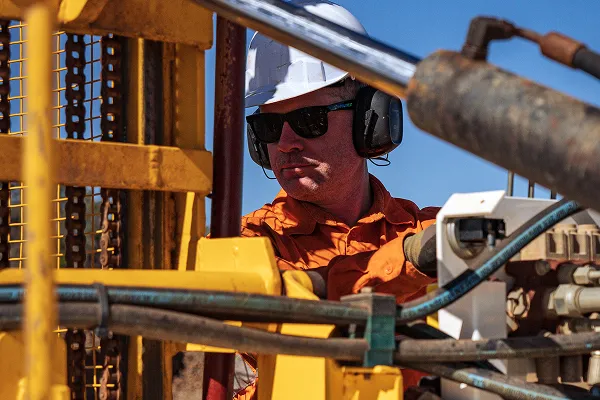
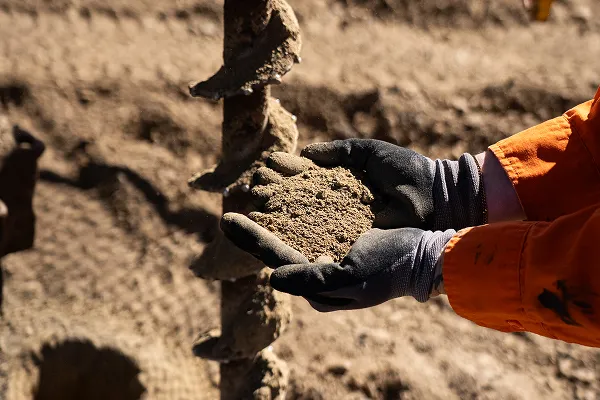
For a standard house or extension, Soiltech then drills two test holes to a minimum depth of 2.5 metres. The soil profile is logged, samples are collected, and suitable material is sent for laboratory testing.
This is why a site investigation is more than drilling a couple of holes. What the team sees on the surface helps explain what they find underground.
Samples are tested in Soiltech’s NATA accredited laboratory. The testing includes moisture content and helps confirm how reactive the soil is, meaning how much it’s likely to move as moisture levels change through the seasons.
The site classification is the outcome of the investigation. It’s the AS2870 report that rates your site from Class A (stable) through to Class P (problem site), based on the ground movement your footings need to handle.
Your engineer uses it to design your slab and footings, and it forms part of your building approval documentation. If you’d like to understand each class in detail, our guide to site classifications under AS2870 walks through them.
For houses, extensions, granny flats and similar projects, a residential site investigation is what you need. Larger or more complex projects, such as commercial developments and infrastructure, call for a broader geotechnical investigation with deeper drilling and additional testing.
If your project is on the larger end, take a look at Soiltech’s geotechnical services. For homes and small developments, see our residential soil testing services.
For most homeowners and owner builders, the answer is simple:
Whatever name your builder uses, the goal is the same: giving your engineer reliable information about the ground before they design your foundations.
A little preparation helps the investigation run smoothly. When you contact the team, have these ready:
If it’s an extension, sending the plans in advance helps the technician position the test holes near the new structure.
Ground conditions can change from one suburb to the next, and sometimes from one block to the next. Soiltech has been operating since 1986 and has completed close to 50,000 residential site classifications across Queensland and Northern New South Wales.
If you’re building in the Brisbane area, our guide to soil testing in Brisbane covers what homeowners should expect. Planning a build in the west? Read our guide to building in Ipswich. With offices in Toowoomba and Warwick, the team also works across the Darling Downs and surrounding regions.
You can see examples of our work on the projects page.
Soiltech’s site classifiers are QBCC registered and testing is carried out through our NATA accredited laboratory, so your engineer and builder get information they can rely on.
Contact Soiltech or call 1300 736 724 to arrange your site investigation. You can also browse our FAQs for quick answers.
Is a soil test the same as a site investigation?
For residential builds, they’re closely related. A soil test is the everyday name for the testing, while a site investigation covers the full process: site inspection, drilling, sampling, laboratory testing and the final report.
What is the end result of a site investigation?
An AS2870 site classification report. Your engineer uses it to design a slab and footing system that suits your site.
How deep are the test holes?
For a standard house or extension, Soiltech drills two test holes to a minimum depth of 2.5 metres.
Do I need a different type of investigation for a granny flat or extension?
Granny flats and extensions are covered by a residential site investigation. Larger or more complex projects may need a geotechnical investigation instead.
Can I use my neighbour’s soil report?
No. Soil conditions can change over short distances, so each block should be investigated individually.

At Soiltech, we pride ourselves on providing professional and reliable soil testing services. Whether you're in the construction industry, civil engineering, residential development, or mining, our team of experts is here to assist you. Contact us today to schedule a consultation or inquire about our services.


