

Quick answer: Allow about two weeks from booking to receiving your AS2870 site classification report. The drilling on your block usually takes just a few hours. Most of the time goes into laboratory testing and preparing the report your engineer needs.
If you’re building a home in Brisbane or anywhere in South East Queensland, the soil test is one of the first jobs on your list. It’s also one of the easiest to underestimate.
The work on your block is quick. But the report has to be finished before your engineer can design your slab and, in Queensland, generally before your builder signs a regulated building contract with you. Get the timing wrong and a two week job can hold up everything behind it.
Since 1986, Soiltech has completed close to 50,000 residential site classifications across Queensland and Northern New South Wales. This guide uses that experience to show where the two weeks go, what slows things down and when to book so your soil test never becomes the reason your build stalls.
Short answer: Soiltech’s standard allowance is two weeks from booking to report. Some jobs come back sooner and some take longer, depending on site access, weather, ground conditions and the testing your site needs.
That two weeks splits into two very different parts: a short visit to your block, and a longer stretch of lab work and reporting. For the short version, see our FAQ on how long a soil test takes. (new link: https://www.soiltech.com.au/learn-more-about-our-soil-testing-services/how-long-does-a-soil-test-take)
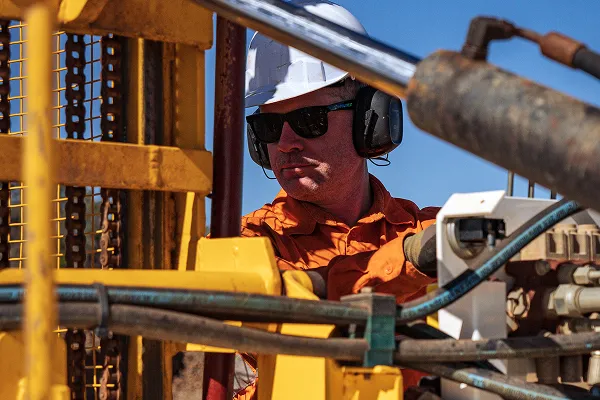
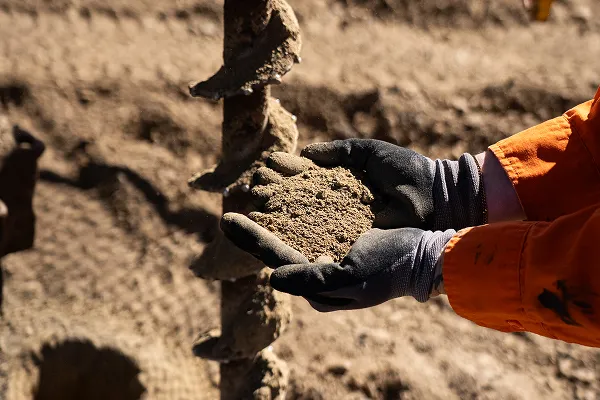
For a standard house or extension, Soiltech drills two test holes to a minimum depth of 2.5 metres. The technician logs the soil profile, collects samples and inspects the block for anything that could affect your footings, such as fill, drainage problems, large trees or old earthworks.
On a standard residential block, this field work is usually finished within a few hours. Ask the team when you book whether you need to be on site, and make sure they can get the drill rig to the building area.
Your samples then go to Soiltech’s NATA accredited laboratory. Testing includes moisture content and checks that show how reactive your soil is, meaning how much it’s likely to swell and shrink as it gets wetter and drier.
A QBCC registered site classifier then reviews the field and lab results together and assigns your site classification under AS2870, the Australian Standard for residential slabs and footings. Lab testing and reporting generally take several business days, depending on the testing your site needs.
Short answer: A residential soil test runs in four stages: booking, the site investigation, laboratory testing and the site classification report. The site visit is the shortest stage. Lab testing and reporting take the longest.
Here’s how a typical residential job breaks down.
StageWhat happensTypical timeWhat can stretch it1. Booking and schedulingYou send the address, plans and access details. The team schedules a drill rig visit.Varies with demand and locationMissing plans, unclear access, busy building periods2. Site investigationSite inspection, two test holes to at least 2.5 metres for a standard house or extension, soil logging and samplingUsually a few hours on siteWet or soft ground, locked gates, steep or overgrown blocks, underground services3. Laboratory testingNATA accredited testing, including moisture content and soil reactivitySeveral business days, together with stage 4Extra tests requested by your engineer, complex soil profiles4. Site classification reportA QBCC registered site classifier assigns your AS2870 class and issues the reportIncluded in the lab and reporting timeFill, sloping sites or Class P conditions needing further assessmentTotalAbout two weeks (Soiltech’s standard allowance)
Short answer: The lab stage takes longest because your site classification depends on how your soil reacts to moisture. That has to be measured properly in a laboratory, not estimated by looking at the soil on site.
Much of the soil across South East Queensland contains clay that expands when it’s wet and shrinks when it dries. The amount of movement decides your site class, from Class A (stable sand and rock) through to Class E (extremely reactive), or Class P where problems like fill or soft ground need extra assessment.
Your engineer designs your slab and footings around that class. A higher class can mean deeper beams, more concrete and more steel, so the classification directly affects your build cost.
That’s why the lab work isn’t a step to rush or skip. Incorrect site classification can lead to building movement, cracking and structural distress over time. Testing through a NATA accredited laboratory gives your engineer, builder and certifier results they can rely on. Our guide to AS2870 site classifications explains what each class means for your slab.
Short answer: The most common delays are wet weather, poor site access, missing building plans and complicated ground such as fill or sloping blocks. Most of these can be avoided if you sort them out when you book.
Here’s what we see most often across Brisbane, Ipswich and the Darling Downs:
Local ground conditions play a part too. Brisbane’s western suburbs often have highly reactive clay, older suburbs can hide undocumented patios, pools or retaining walls, and newer estates may include engineered fill. Our guides to soil testing in Brisbane and building in Ipswich cover these local conditions in more detail.
Short answer: Book your soil test once you have access to the land and know roughly where the building will sit. It should be done before your engineer designs the slab and before you sign your building contract.
Most people think of the soil test as a pre construction job. In Queensland, it’s really a pre contract job.
For regulated domestic building contracts, Queensland law generally requires your builder to obtain “foundations data” for the site before the contract is signed. This sits in Schedule 1B of the Queensland Building and Construction Commission Act 1991, and the QBCC’s own contract checklist asks owners to confirm their builder has obtained foundations data, given them a copy and allowed for it in the contract price when the work involves a concrete slab.
The rule protects you. If a builder signs without that data, they generally can’t charge you later for extra footing costs that the data would have revealed. There are limited exceptions, such as when the builder can’t lawfully get onto the land before signing and the contract guarantees no price increase because of the foundations data.
So in practice, your two week soil test window needs to finish before your contract date, not just before your slab pour.
This is general information, not legal advice. Speak to your builder, conveyancer or a construction lawyer about your own contract.
Book too late and unexpected ground conditions can hold up your footing design, your contract or both. Book too early and later earthworks, such as cutting a building platform or adding fill, can change the ground you’ve already tested.
The sweet spot is after your layout is settled and before engineering starts.
If you haven’t bought yet, a pre purchase soil test can show you what kind of slab and footings the block may need before you’re locked in. You’ll need the owner’s permission to access the site. Ask your conveyancer whether your land contract can allow time for testing.
Short answer: The soil test is one of the very first steps. It comes after securing the land and settling your layout, and before slab engineering, building approval and construction, because each of those steps relies on your site classification.
A typical residential sequence in Queensland looks like this:
Timeframes for engineering and approval vary between engineers, certifiers and projects, so ask your builder for their current estimates and add the soil test’s two weeks to the front.
Short answer: Sometimes, yes. Booking early, sending plans with your booking, clearing site access and mentioning any known fill all help. If you’re working to a tight deadline, tell the team when you book.
The biggest time savers are in your hands:
Faster turnaround can’t always be guaranteed, because lab testing takes the time it takes. But when there’s a genuine deadline, it’s worth asking.
Short answer: Extensions, granny flats, pools and knockdown rebuilds usually follow the same residential process and timeframe as a new house. Larger commercial or civil projects need a geotechnical investigation, which is scoped to the project and takes longer.
Soiltech’s residential soil testing services cover new homes, extensions, knockdown rebuilds, granny flats, pools, retaining walls, subdivisions and pre purchase assessments.
For commercial buildings, infrastructure and other complex sites, a broader investigation with deeper drilling and more testing is needed. That’s covered by our geotechnical services. Not sure which one you need? Our article on site investigation vs soil test explains the difference.
Two weeks is easy to plan around when you know it’s coming. It only hurts when it catches you after you’ve chosen a builder and set a start date.
Book your soil test as soon as your land and layout are sorted, and you’ll have your AS2870 site classification in hand before your engineer and builder need it. That means firmer footing costs in your contract, fewer surprises and a build that starts on time.
Soiltech’s QBCC registered site classifiers and NATA accredited laboratory have helped homeowners, owner builders and builders across Brisbane, Ipswich, Springfield, Logan, Toowoomba and the Darling Downs since 1986.
Book your soil test online or call 1300 736 724 to lock in your date.
Is two weeks normal for a soil test in Brisbane?
Yes. Two weeks is Soiltech’s standard allowance from booking to report for a residential soil test. The drilling itself usually takes a few hours, and the rest covers scheduling, laboratory testing and reporting. Some jobs are finished sooner, while wet weather, access problems or complex sites with fill can add time.
Do I need a soil test before signing a building contract in Queensland?
Usually, yes. For regulated domestic building contracts, Queensland law generally requires your builder to obtain foundations data for the site before the contract is signed, and a soil test typically provides that data. Limited exceptions apply, so check the details of your contract with your builder or a construction lawyer.
Can rain delay a soil test?
Yes. After heavy rain, a drill rig may not be able to reach soft ground safely without damaging your block, so the site visit may need to be moved. If your test falls during Brisbane’s summer storm season, allow a few extra days in your timeline and keep access to the building area clear.
Can I get a soil test before I buy land?
Often, yes, as long as the owner gives permission to access the block. A pre purchase soil test shows you what kind of slab and footings the site may need before you commit to buying. Ask your conveyancer whether your land contract can allow enough time to complete the testing.
How can I get my soil test results faster?
Book as soon as you have the land and know your layout. Send the address, plans, access details and anything you know about fill or drainage with your booking, and keep the site clear for the drill rig. If you’re working to a deadline, tell the team upfront so they can advise.

At Soiltech, we pride ourselves on providing professional and reliable soil testing services. Whether you're in the construction industry, civil engineering, residential development, or mining, our team of experts is here to assist you. Contact us today to schedule a consultation or inquire about our services.


