
Every year, homeowners across Brisbane buy land that looks perfectly suitable for building. The block is flat. The grass is green. Nothing appears out of the ordinary.
Then the soil test comes back.
We've seen sites where reactive clay wasn't visible from the surface. We've investigated blocks that contained old fill from previous earthworks. We've also tested neighbouring lots in the same estate that received completely different site classifications.
That's why soil testing in Brisbane is one of the first things builders, engineers, and homeowners organise before construction begins.
The information gathered during a soil test helps determine how your home should be designed and what foundation system is required. Getting it right early can help avoid delays, unexpected costs, and foundation problems later.
Before an engineer can design footings or a slab, they need to understand what's happening beneath the ground.
The purpose of a soil test is to identify the site's soil profile, moisture conditions, and potential movement characteristics. That information is then used to determine how the home should be founded.
Without testing, there is no reliable way to know whether the site contains stable ground, highly reactive clay, uncontrolled fill, or other conditions that could affect construction.
For homeowners, that means the soil test plays a direct role in:
It's a relatively small investment compared to the cost of fixing foundation issues after a home has been built.
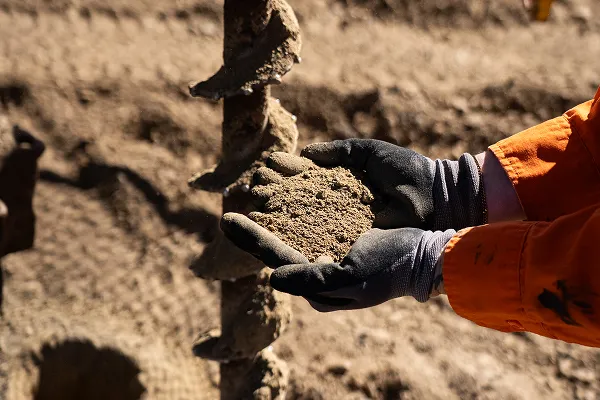
For a standard house site, a technician will typically complete two test holes to a depth of at least 2.5 metres.
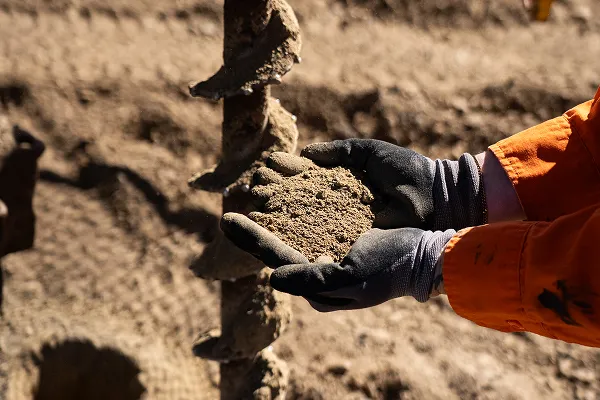
During the investigation, soil samples are collected from different depths and sent to a laboratory for testing.
The testing process examines factors such as soil composition, moisture content, strength, and reactivity.
The field and laboratory results are then used to prepare an AS2870 site classification report.
This report becomes one of the key documents used by builders, engineers, certifiers, and designers throughout the project.
One of the main outcomes of soil testing in Brisbane is determining the site's classification under Australian Standard AS2870.
The classification reflects how much the ground is likely to move as moisture conditions change.
Clay soils expand when they absorb moisture and shrink as they dry out. The greater the movement potential, the more consideration must be given to foundation design.
Common classifications include:
Stable sites with little to no ground movement expected.
Slightly reactive sites with low levels of ground movement.
Moderately reactive sites where some movement is expected.
Highly reactive clay sites that require more substantial foundation design.
Extremely reactive sites with significant movement potential.
Problem sites that may contain fill, soft soils, seepage, erosion, landslip risk, or other abnormal conditions.
Many homeowners assume their classification will be similar to neighbouring properties. That's not always the case.
We've investigated blocks where one property was classified as Class M while the adjoining lot required a Class H design because of differences in soil composition and moisture conditions.
Brisbane contains a wide range of soil conditions.
In many western and outer growth areas, highly reactive clay soils are common. New residential estates can also contain sites affected by cut and fill earthworks completed during subdivision works.
Older suburbs sometimes present different challenges. Large established trees, historical fill placement, and varying groundwater conditions can all influence soil behaviour.
One of the most common assumptions homeowners make is that a block must be suitable because nearby homes have already been built.
Unfortunately, ground conditions don't always follow fence lines.
We've tested sites where the upper layer appeared consistent across an estate, only for deeper investigations to reveal very different soil conditions beneath neighbouring blocks.
That's why residential soil testing in Brisbane should always be completed on the individual property being developed.
The cost of a residential soil test depends on several factors, including site access, drilling requirements, location, and the type of report required.
For most homeowners, the cost of testing is minor when compared with the overall construction budget.
More importantly, the information obtained during the investigation can help prevent costly design changes later in the project.
Trying to save money by skipping a soil test often creates far greater expenses if unexpected ground conditions are discovered during construction.
The best time to organise a soil test is after purchasing land and before engineering design is finalised.
This allows the engineer to design foundations using actual site information rather than assumptions.
Residential soil investigations are commonly completed for:
The earlier the testing is completed, the easier it is to keep the project moving without unnecessary delays.
Homeowners wanting more information about the process can read Why Do I Need a Soil Test.
The on site investigation for a standard residential block is usually completed within a few hours.
Laboratory testing and report preparation require additional turnaround periods, depending on project requirements.
While the field work itself is relatively quick, the real value comes from the analysis performed afterwards.
The report provides the information engineers need to design suitable foundations and helps everyone involved understand the site's construction requirements before work begins.
Not every testing provider offers the same level of experience, equipment, or local knowledge.
Brisbane and South East Queensland contain a broad range of ground conditions. A company that works across residential, civil, commercial, and infrastructure projects often develops a stronger understanding of how those conditions vary between regions.
Look for a provider that can supply compliant reporting, laboratory testing, and site classifications in accordance with Australian Standards.
It's also worth choosing a company that can respond quickly when timelines become tight. Builders, engineers, and homeowners rarely have the luxury of waiting weeks for answers when approvals and construction schedules are already underway.
The foundation design for your home is only as good as the information used to create it.
A soil test provides the data needed to understand ground conditions before construction starts. It helps engineers make informed decisions, supports the approval process, and reduces the risk of unexpected problems once building is underway.
If you're planning a new home, extension, or residential development, Soiltech provides professional soil testing in Brisbane and throughout South East Queensland. Our team has been helping homeowners, builders, developers, and engineers understand site conditions since 1986.
Contact Soiltech today to arrange your soil test and take the uncertainty out of your next project.
Frequently Asked Questions
Do I need a soil test before building in Brisbane?
Yes. Builders, engineers and certifiers require a site classification before footings can be designed, and most Brisbane councils won't approve a build without one.
How much does soil testing cost in Brisbane?
Cost depends on site access, drilling requirements and the type of report needed. It's a small cost relative to the overall build, and far cheaper than fixing a foundation problem after construction has started.
How long does a soil test take?
The on site investigation is usually completed within a few hours. Laboratory testing and report preparation take longer, with turnaround depending on the scope of work.
Can I rely on my neighbour's soil test?
No. Ground conditions can change significantly within the same estate or even across a single block, so every site needs its own investigation.
What does a Class P site mean?
Class P means the site has conditions that need further engineering assessment, such as fill, soft soils, seepage or erosion risk. It doesn't mean the block can't be built on.
Do older Brisbane suburbs need different testing to new estates?
The soil test process is the same, but the conditions found can differ. Older suburbs often have established trees and historical fill, while new estates can include cut and fill from subdivision works. Both need individual assessment.
When should I book my soil test?
Ideally after purchasing land and before your engineer finalises the design. Testing early avoids delays if the ground conditions require a different footing approach.
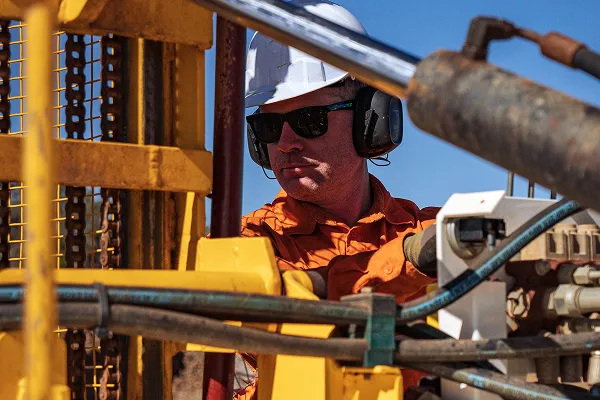

At Soiltech, we pride ourselves on providing professional and reliable soil testing services. Whether you're in the construction industry, civil engineering, residential development, or mining, our team of experts is here to assist you. Contact us today to schedule a consultation or inquire about our services.


